- PR
Nutrition Communications: The Power of Simplicity in a Complex Health Market
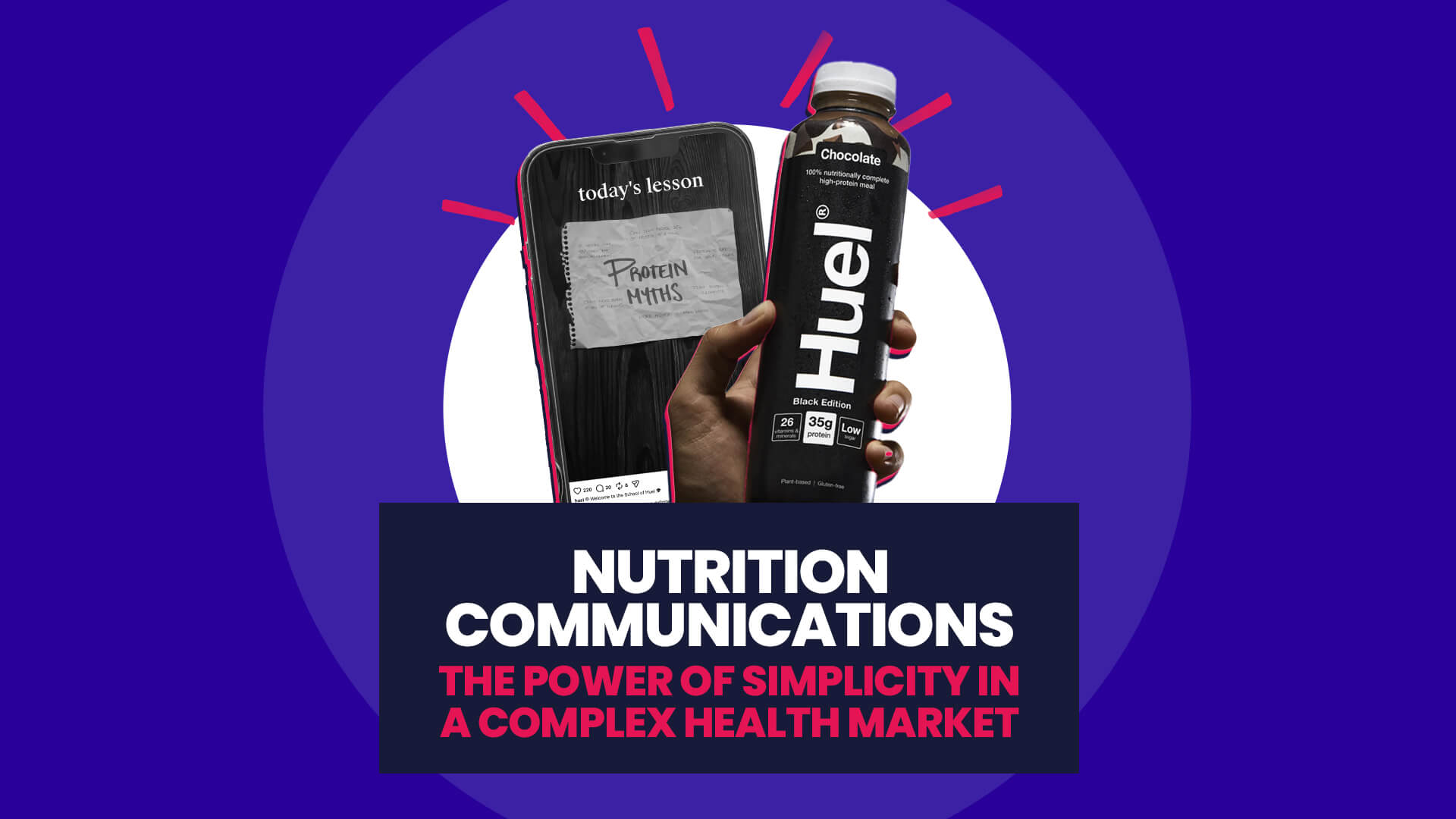
When Huel launched in 2015, it quickly became clear that strategic nutrition communications would be just as important as the product itself. The concept of a drinkable meal – a nutritionally complete powder mixed with water – was divisive from the start. One early review even described it as “a thin suspension of powdered grit”. Hardly the sort of endorsement brands hope for when launching a disruptive food product.
Yet in the decade since, Huel’s complete nutrition model has gone from strength to strength.
The powders remain a staple for its core fans. But the brand has expanded into ready-to-drink shakes, conveniently placed vending machines, nutrition bars and even instant meal pots.
From niche startup to £1bn acquisition
The success of Huel meal replacement products has been striking.
In 2024 the brand surpassed £200m in sales, driven by its fast-growing ecommerce business alongside an increasing number of retail listings.
Then came the ultimate validation: in March, global food giant Danone acquired the brand in a deal reportedly worth €1bn (£865m).
While some analysts viewed the price as ambitious, the acquisition was widely seen as a strategic coup.
That’s because Huel sits at the intersection of several powerful consumer trends.
The rise of convenience nutrition
The concept of a drinkable meal will never appeal to everyone. For some food lovers, it borders on sacrilege. And it inevitably sits within the broader debate around ultra-processed foods.
Yet meal replacement drinks offer advantages that resonate strongly with modern lifestyles.
Huel provides key nutrients, portion control and convenience in one accessible format. According to the brand’s website, some meals start from just £1.59.
Convenience, meanwhile, is one of the most powerful forces in the food and drink sector.
Huel’s format makes daily nutrition simple: either mix a powder with water or grab a ready-to-drink bottle on the go. For many consumers navigating an overwhelming landscape of diets, supplements and health advice, that simplicity is a major selling point.
Complete nutrition for modern lifestyles
It would be easy to overlook the role of communication in Huel’s rise. But effective storytelling has been crucial.
Taste criticism could easily have derailed the brand early on. Instead, Huel focused its messaging on the functional benefits: convenience, affordability and balanced nutrition.
Strategic partnerships also played a role. The brand has worked with high-profile advocates including actor Idris Elba, a self-described “Hueligan”, helping bring credibility and visibility to the proposition.
Ultimately, Huel has positioned itself not simply as a product, but as a healthy lifestyle made simple.
Translating nutrition science into relatable stories
For communications professionals, this challenge is familiar. Take our work with British Lion Eggs, where the task is to translate strong nutritional credentials into messaging that is both credible and accessible.
The power of simplicity in a complex health landscape
In a health landscape that can feel increasingly confusing, simplicity has enormous value.
Huel’s success shows how powerful that proposition can be when supported by clear messaging and consistent communication.
Because when a brand can convincingly promise to make healthy living easier, it isn’t just selling a product. It’s selling peace of mind.
If you’d like to discuss how strategic communications can help bring your brand’s health and nutrition story to life, get in touch with our team.
« The Creatine Boom: Why Communications Will Be Key ‘Little Treat’ Culture: Clever Branding That Works »