- PR
- Social Media
Cultural relevance: How KFC is keeping pace with the challengers
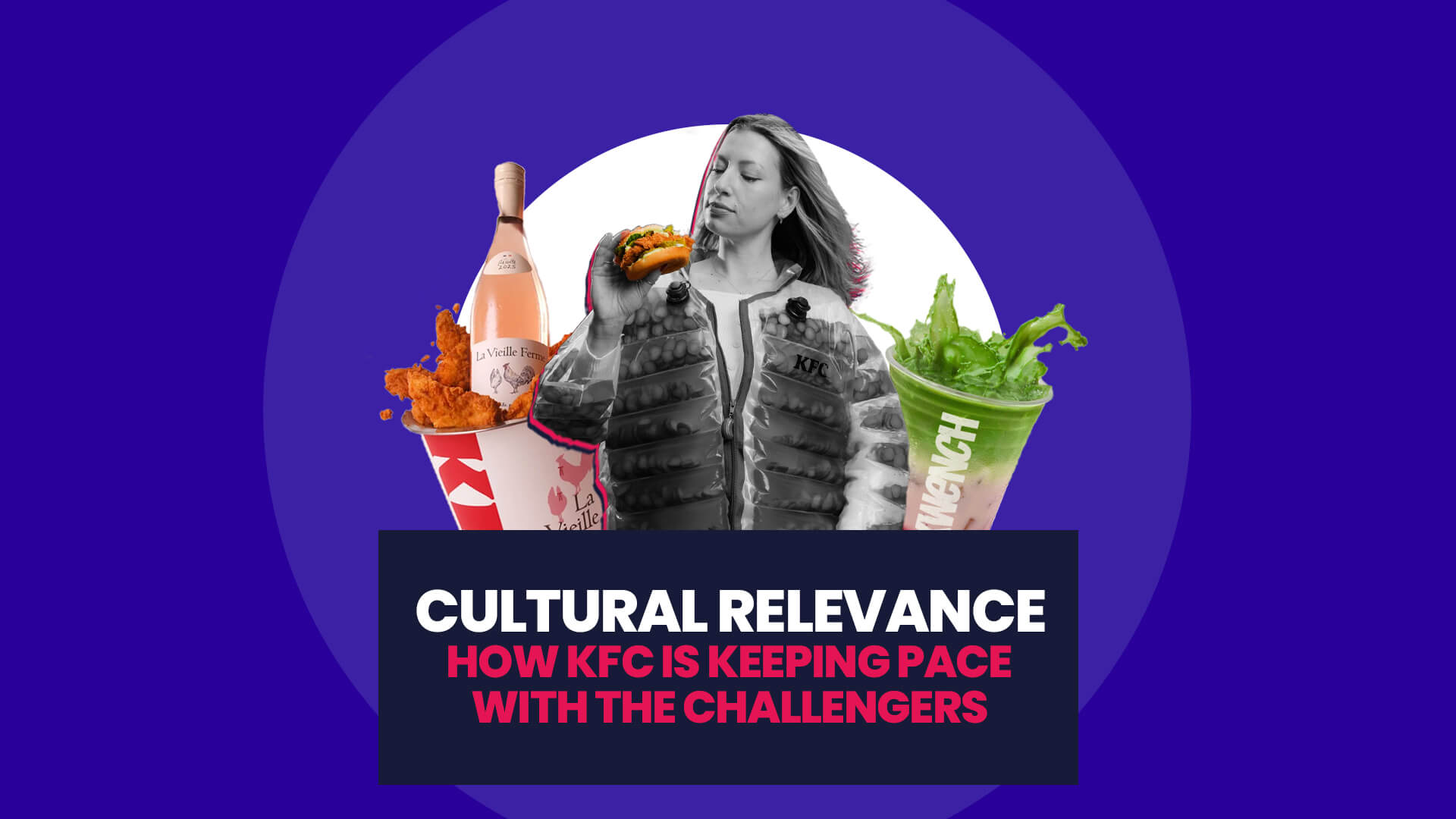
What do Dave’s Hot Chicken, Chick-fil-A, Raising Cane’s, Wingstop and Houston Hot Chicken all have in common? For starters, they’re all fried chicken brands. But more importantly, they’re all US names that have made their way into the UK – helping turn fried chicken into one of the UK’s buzziest fast-food categories. And for KFC, their arrival offers an interesting lesson in brand rejuvenation: how can an established name respond when a wave of exciting new challengers enters its category?
The crunchy delicacy – once associated with cheap cuts of meat, consumed hastily in late-night, fluorescent-hued venues – is now the subject of online buzz. Aficionados are queuing around the block for new openings such as Dave’s Hot Chicken, which made its UK debut in London in late 2024.
For an incumbent like KFC, that influx of culturally relevant challengers could have been a threat. Instead, it has created an opportunity – bringing fresh attention to the category just as KFC has found new ways to make itself relevant within it.
KFC arrived on these shores back in 1965, and new entrants are boasting exciting menus – see the Spicy Buffalo Mac & Cheese at Dave’s, or the Mango Habanero chicken at Wingstop – that could easily have left a more established name looking old hat.
Yet in its latest results, KFC emerged stronger than ever. The fast food chain delivered double-digit sales growth in the second quarter of 2026, while same-store sales grew 9% in the year to date.
Crucially, KFC attributed that success to the launch of its Pickle Mania menu, which spans delicacies such as a Pickle Burger, Pickle Loaded Fries and Frickles (fried pickles). It’s a neat illustration of how an established brand can tap into renewed excitement around its category, while giving consumers a fresh reason to choose it.
Pickle Mania is just one example. Just last month, it added a street food-inspired range featuring naan bread as burger buns, and introduced matcha to its outlets for the first time.
What’s notable is how closely that innovation pipeline tracks wider food culture. Both pickles and matcha have enjoyed an explosion in popularity, fuelled by social media, while Indian street food is also on the rise. KFC’s recent innovation shows the value of identifying cultural trends with genuine staying power – and translating them into something that feels distinctive to the brand.
But product innovation alone isn’t enough to rejuvenate an established brand. It needs communications that make those innovations feel culturally relevant and worth talking about.
Last year, the chain announced it was rejuvenating its social strategy to win over Gen Z. That’s involved tongue-in-cheek content, such as a TikTok post for its matcha that teasingly compared Loughborough to LA. The tone gives KFC permission to participate in the same online conversations driving excitement around its newer competitors, without trying to behave like a challenger brand it isn’t.
And therein lies the wider lesson for established brands. The answer isn’t to mimic the challengers snapping at their heels. It’s to understand what those challengers reveal about changing consumer tastes – and respond in a way that remains distinctive and credible to your own brand.
For KFC, that has meant combining the scale and familiarity of an established name with the pace of innovation, cultural relevance and communications swagger more commonly associated with a challenger.
Category disruption doesn’t have to spell trouble for incumbents. Done well, it can create a fresh wave of consumer interest for established brands to earn their share of – and, as KFC’s latest results demonstrate, that can pay dividends.
Looking to keep your brand culturally relevant and earn attention in a changing category? Get in touch to find out how we can help.
« Brand Storytelling: What Lifestyle Journalists Demand in 2026 AI and brand trust: why credibility matters more in the age of AI »