- PR
Brand Storytelling: What Lifestyle Journalists Demand in 2026
In an increasingly saturated media landscape, securing earned media for your brand isn’t as simple as firing off a press release alongside a glossy product shot. If you work at a PR agency, you already know that food editors are inundated with hundreds of pitches every single week. In 2026, journalists are demanding far more than generic product launches, they are looking for bold, innovative brand storytelling that cuts through the noise and delivers genuine brand discoverability.
Traditional food and drink PR tactics alone are no longer enough to build lasting brand awareness and earn demand. Standard recipe drops, packaging tweaks or seasonal updates all have their place, but the stories that really cut through tend to offer something more: cultural relevance, genuine insight, a strong human story, unexpected creativity or a fresh perspective on something already occupying consumers’ attention.
Crucially, that requires brands to think beyond what they want to communicate and consider what makes a story valuable to a journalist and their audience. A product sample might introduce someone to a brand, but a compelling story gives them a reason to cover it – and their audience a reason to stop, engage and share.
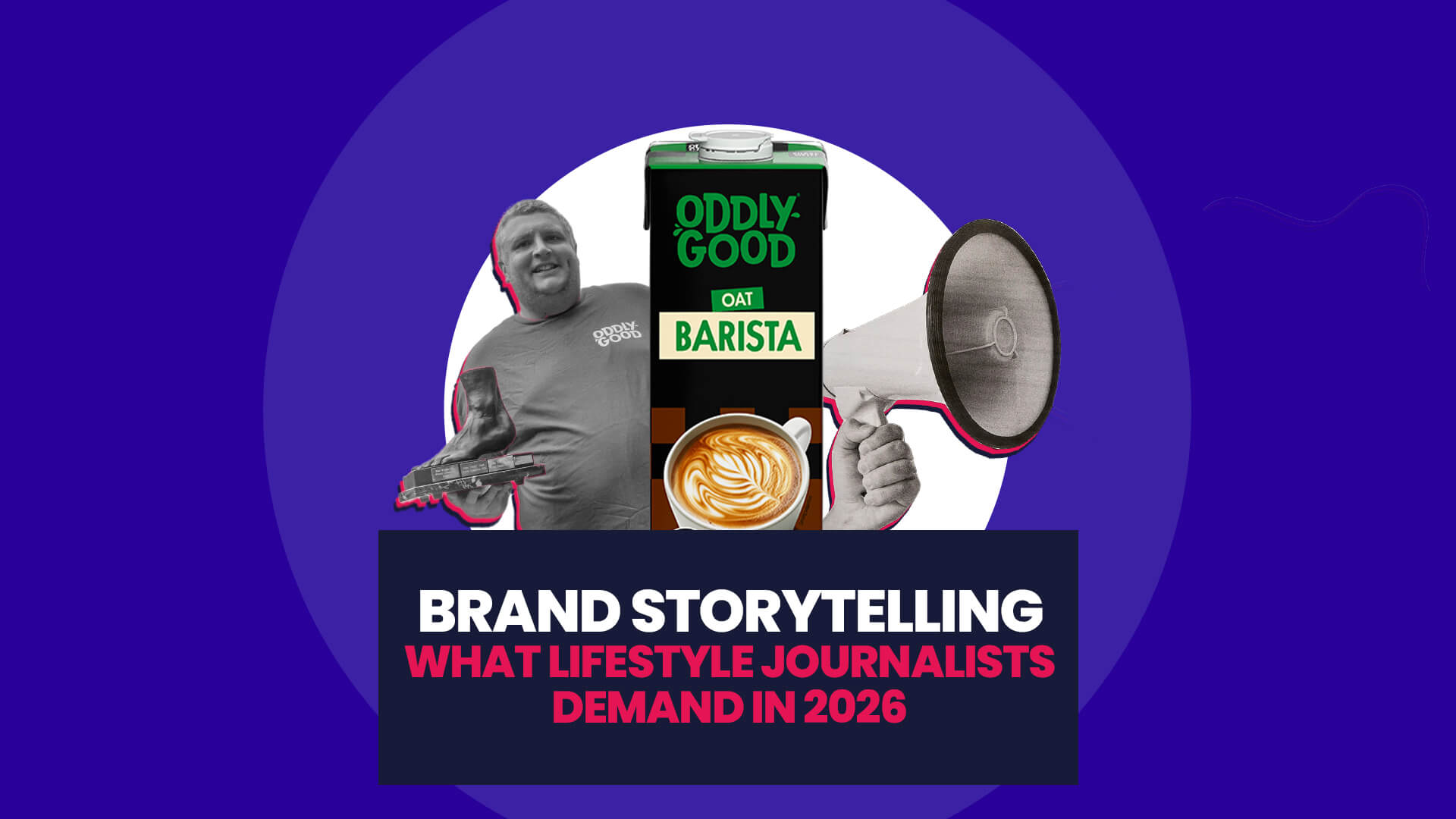
This shift is precisely why creative bravery pays off. Take our work with Oddlygood for ‘The Oddlympics’. Rather than relying on conventional product sampling during a crowded summer of elite sports, we tapped into the brand’s ethos of ‘making odd the new norm’ by sponsoring the World Toe Wrestling Championship. By connecting the brand to the wider sporting conversation through a brilliantly quirky real-world event, we created something that felt both unexpected and unmistakably Oddlygood.
The idea worked because the brand wasn’t simply inserting itself into a trending conversation. There was a genuine connection between the cultural moment, the creative idea and Oddlygood’s positioning. The campaign generated over 156 million media impressions, 25 media articles and multiple national interviews.
That’s an important distinction. Being unexpected for the sake of it isn’t enough. The strongest creative PR ideas give journalists something surprising to talk about while still reinforcing what the brand wants to be known for.
In 2026, earning attention means understanding what makes a story valuable to a journalist and their audience – not simply what a brand wants to say.
For food and drink brands, that means finding the intersection between cultural relevance, creative bravery and a clear brand truth. Get that right and earned media can do far more than generate coverage: it can build the fame, credibility and discoverability that drive long-term demand.
Want to create food and drink PR that earns attention? Get in touch.
« Women’s health marketing: How brands can build trust Cultural relevance: How KFC is keeping pace with the challengers »