- Design
- PR
- Social Media
AI and brand trust: why credibility matters more in the age of AI
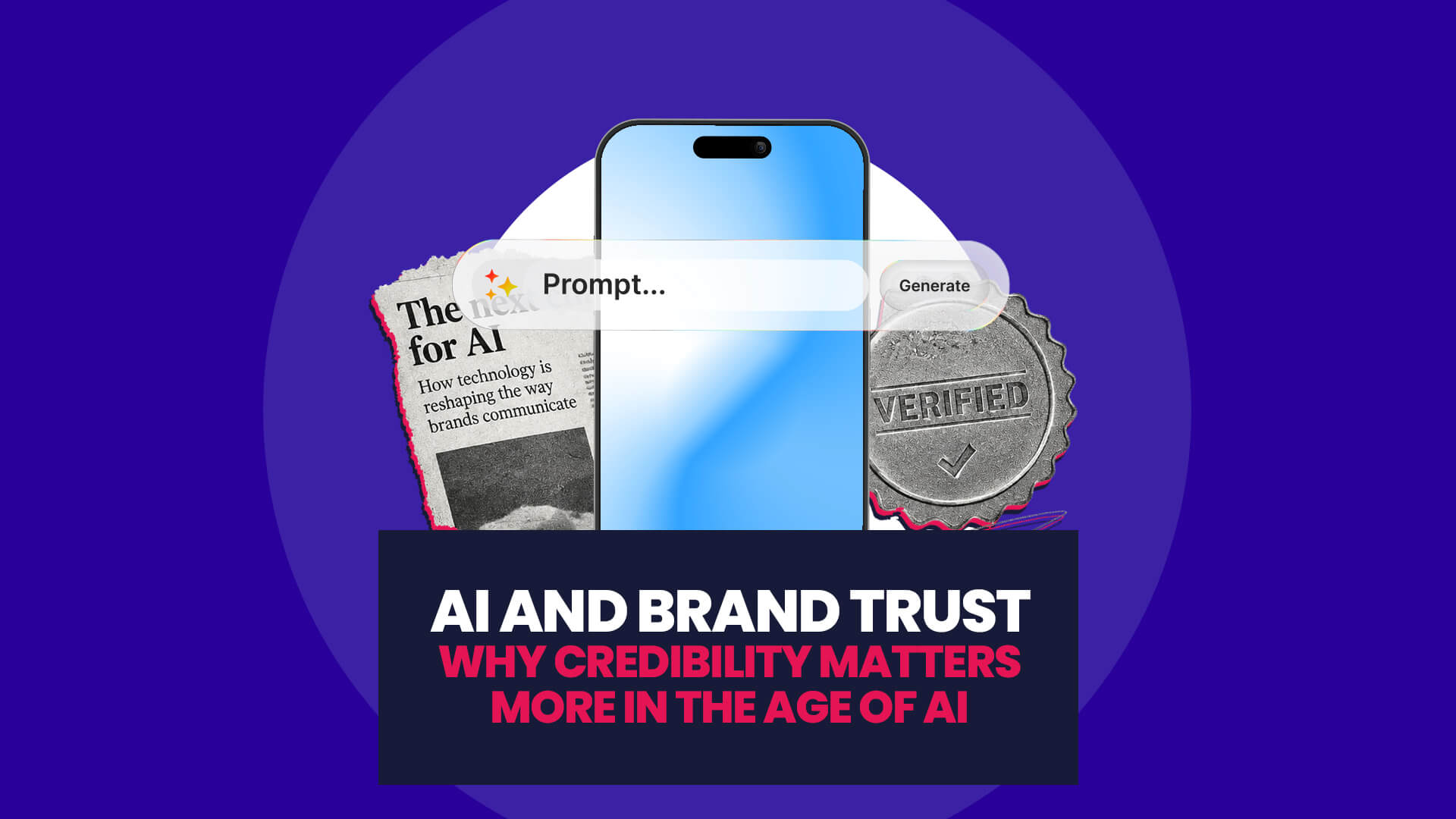
AI and brand trust are becoming increasingly intertwined. As AI makes it faster and easier for brands to create content, communicate at scale and put more information into the world, consumers are also facing a bigger challenge: working out what – and who – they can actually trust.
For marketers, that creates something of a paradox. AI can make brands more efficient and responsive, but the more content consumers encounter, the more valuable genuine credibility becomes.
AI and brand trust: more content doesn’t necessarily mean more credibility
Generative AI has dramatically lowered the barrier to creating polished content. Brands can produce articles, social posts, imagery, product descriptions and campaign ideas faster than ever before.
But consumers aren’t short of content. They’re short of reasons to believe it.
We’re already operating in an environment where people are increasingly sceptical of the claims brands make about themselves, particularly in areas such as health, sustainability, sourcing and efficacy. AI has the potential to amplify that challenge by making it even easier to create convincing claims and authoritative-sounding content.
The result is that simply saying something well is becoming less powerful. Brands increasingly need to demonstrate why people should believe them.
Independent voices become more valuable in the age of AI
This is where earned credibility comes in.
Journalist coverage, independent experts, customer advocacy, credible creators, reviews, certifications and other forms of third-party validation all provide something a brand cannot manufacture simply by creating more content: someone else giving people a reason to believe you.
And what constitutes credible proof will differ by sector. For a food brand, provenance, ingredients or welfare credentials might matter. For drinks, it could be sourcing, craftsmanship or authenticity. In wellness, consumers may be looking for evidence around efficacy and safety.
PR therefore has an increasingly important role to play in building brand trust. It isn’t simply about generating visibility. It’s about creating the independent proof points that make a brand’s wider marketing more believable.
What does AI mean for PR?
Used well, AI can make PR teams faster and smarter. It can help identify trends, interrogate data, support research and accelerate parts of the creative process.
But it can’t replace the fundamental value exchange at the heart of earned media: convincing an independent person that a brand, story or idea is worth their attention and endorsement.
In fact, as AI-generated content becomes commonplace, genuinely earned attention could become more valuable.
The brands that succeed won’t necessarily be those producing the most content. They’ll be the ones giving consumers the strongest reasons to trust what they say.
In the age of AI, content can be generated. Credibility still has to be earned. Get in touch to find out how we can help.
« Cultural relevance: How KFC is keeping pace with the challengers Drinks PR Strategy: How to earn media coverage beyond product launches »