- PR
Wellness, Not Weight Loss: M&S’s Smart Shift
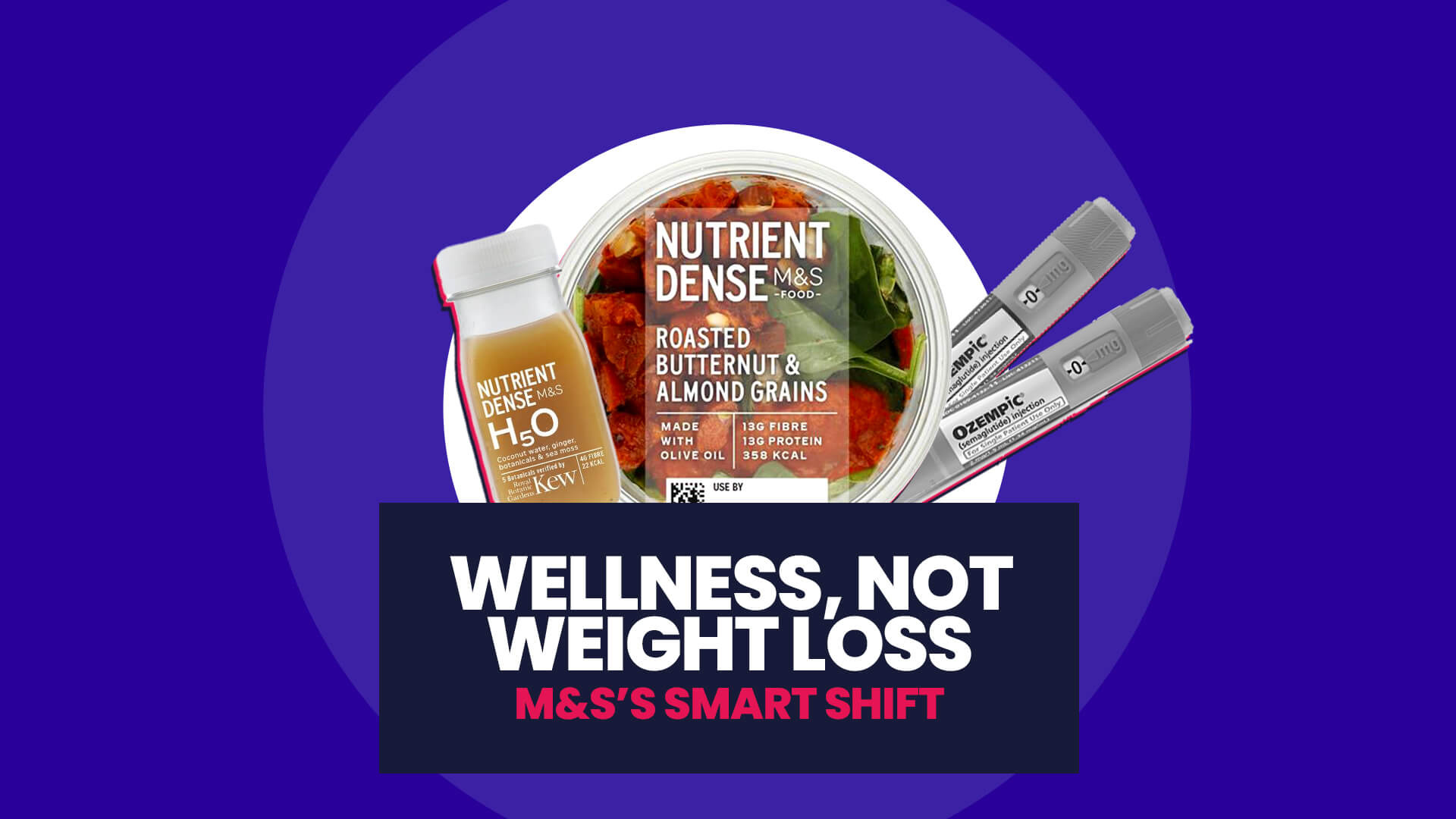
If there’s one retailer with its finger on the pulse of wellness messaging, it’s M&S. Last year, it unveiled an ‘Only… ingredients’ range – containing six ingredients or fewer – to address concerns around ultra-processed foods. Now M&S Food is kicking off the new year with a 20-strong ‘Nutrient Dense’ lineup.
Spanning everything from a Cauli-Rice Prawn Paella to Super Seeded Oaty Bread, the lines are designed for customers on weight loss jabs, who can lack vital nutrients due to a reduced-calorie diet. M&S aims to help this demographic with smaller portioned lines that spell out nutrient content clearly on the front of pack. The prawn paella, for example, packs in 8g of fibre and 22g of protein. The Roasted Butternut Almond Pot provides 13g of each.
The launch shows a real understanding of what wellness means to today’s shoppers. Nutrient Dense may be targeting shoppers on weight loss jabs, but its appeal extends well beyond this corner of the population. Increasingly, health-conscious consumers are rejecting labels that tell us what the food doesn’t contain – for example, ‘low fat or ‘low calorie’. Instead, they see health as a positive choice, so they want to know about the positives of their food.
The Nutrient Dense range acknowledges fibre and protein are both powerful sells. What’s more, each line contains at least one of 10 micronutrients such as vitamin D, iron, folate and vitamin B12. Many of the products also boast a healthy plant content. The concept caters to the idea of a nourishing, truly healthy start to the year, rather than fasting or fad diets.
Crucially, M&S has been careful to back up its claims with expertise. The retailer developed the range in collaboration with the British Nutrition Foundation to ensure it can recommend the products to those on weight loss jabs – or anyone who is eating less – with confidence.
That’s another savvy move. The dizzying number of health claims on the market is making consumers increasingly sceptical. By partnering with a reputable third party, M&S is signalling that it’s making an informed, responsible choice, rather than simply jumping on a bandwagon.
It’s a masterclass in how to launch a product that gains positive column inches, while helping consumers lose inches from their waistline. In the increasingly contentious area of weight loss, M&S has managed to position its range as a choice fuelled by wellness, rather than dieting. Co-op has done something similar with its Good Fuel range, while Morrisons has the exclusive Applied Nutrition brand. The question is: how long will it be before other supermarkets follow suit?
« Health Comms: Navigating the UPF Debate Spring Reset: The PR Audit Every Wellness Brand Needs »