- Design
- PR
Own Label Rising: What Brands Need to Know
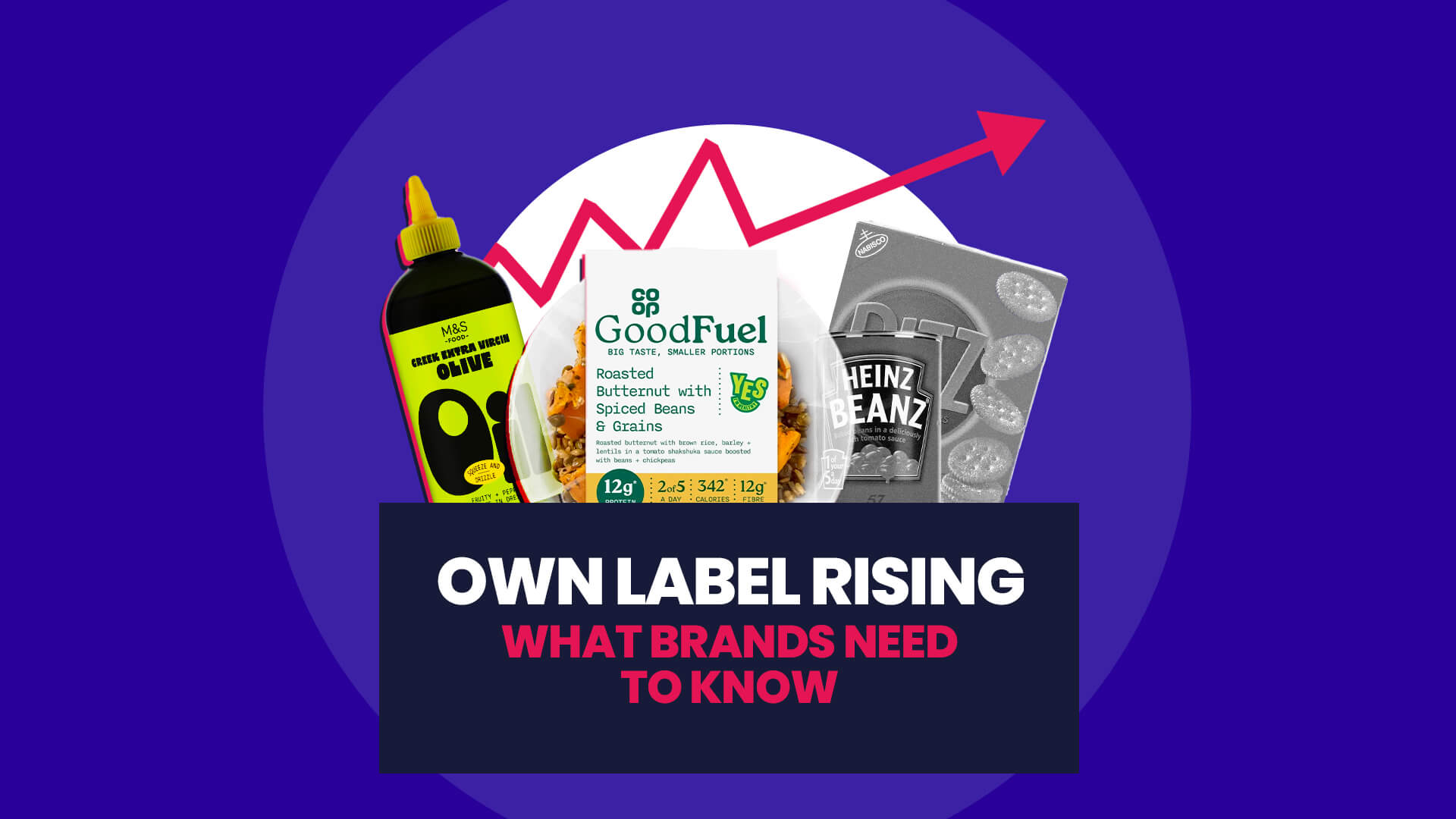
Own label is becoming a hot talking point in FMCG marketing. In April, supermarket ranges overtook brands in volume share of the grocery market, according to data provider Circana. One month later, Mintel revealed private label was outpacing brands in terms of innovation, too.
Supermarkets have achieved those gains by capitalising on key areas of growth. Premium private label, for example, has rapidly gained ground. As consumers trade down from eating out, they are turning to top-tier own label lines to recreate a sense of occasion at home. So even when budgets are tight, these higher-margin items are performing well.
In the Tesco H2 2026 earnings call, CEO Ken Murphy described its Finest range as a “key part” of the supermarket’s strategy, delivering sales growth of 15%. The Sainsbury’s Taste the Difference range passed the £2bn milestone in February, while Aldi’s Specially Selected lineup delivered £1.6bn in sales in 2025.
Private Label Innovation Is Reshaping FMCG Marketing
Another important driver is health-led innovation in FMCG marketing. Own brand ranges have been quick to capitalise on emerging health trends to drive excitement and momentum. A notable example came when Marks & Spencer, Co-op, Morrisons, Iceland and Asda introduced ranges aimed at users of GLP-1 drugs – a largely untapped area of consumer need that brands have been slower to explicitly address.
This shift highlights how private label is increasingly setting the pace in consumer insight, product development, and brand communications at shelf level.
Brands Still Have a Clear Role to Play
However, it’s not a simple case of brands versus own label. Innovation within private label can actually stimulate wider category growth, creating space for both to thrive. In some cases, supermarket-led innovation acts as a testing ground that branded manufacturers can learn from and respond to.
Equally, several standout brands are proving their value in a crowded FMCG landscape. Bold Bean Co has elevated beans from commodity status into a premium cupboard staple. PerfectTed has helped drive mainstream demand for matcha, while Tony’s Chocolonely has successfully combined ethical sourcing with strong brand storytelling, reshaping consumer expectations in the chocolate category.
All of these brands command a premium, yet continue to grow despite economic pressure. Their success underlines a key point: strong FMCG marketing and clear brand positioning still matter.
The Importance of Communication in Brand Differentiation
In a market where private label continues to evolve rapidly, communication becomes a critical differentiator. Brands that clearly articulate their purpose, values, and point of difference can successfully justify premium pricing and build lasting loyalty.
Rather than being threatened by the rise of own label, brands that invest in strong brand communications and distinctive positioning can thrive alongside it.
Ultimately, there is room for both – but only for brands that know exactly why they matter.
Looking to Strengthen Your Brand Positioning?
At Nexus, we help FMCG and retail brands sharpen their positioning, elevate their storytelling, and build standout brand communications that drive real commercial impact. From private label strategy to challenger brand growth, we turn insight into influence.
Get in touch to see how we can help your brand stand out in a changing grocery landscape.
« ‘Little Treat’ Culture: Clever Branding That Works Brand Trust: The Secret To Successful Innovation »